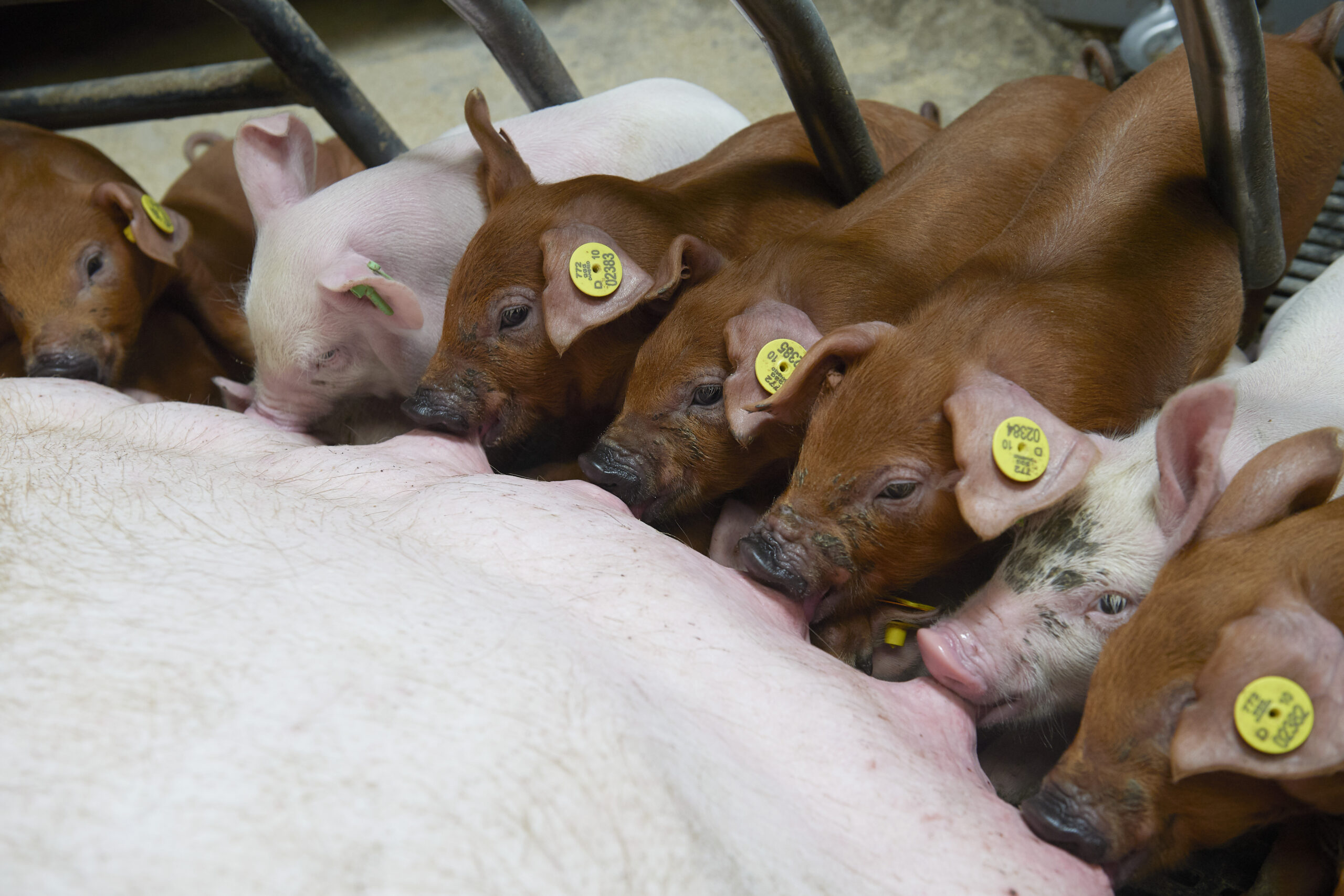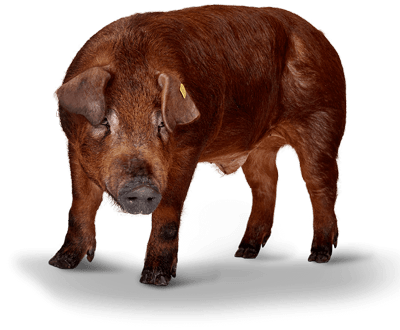
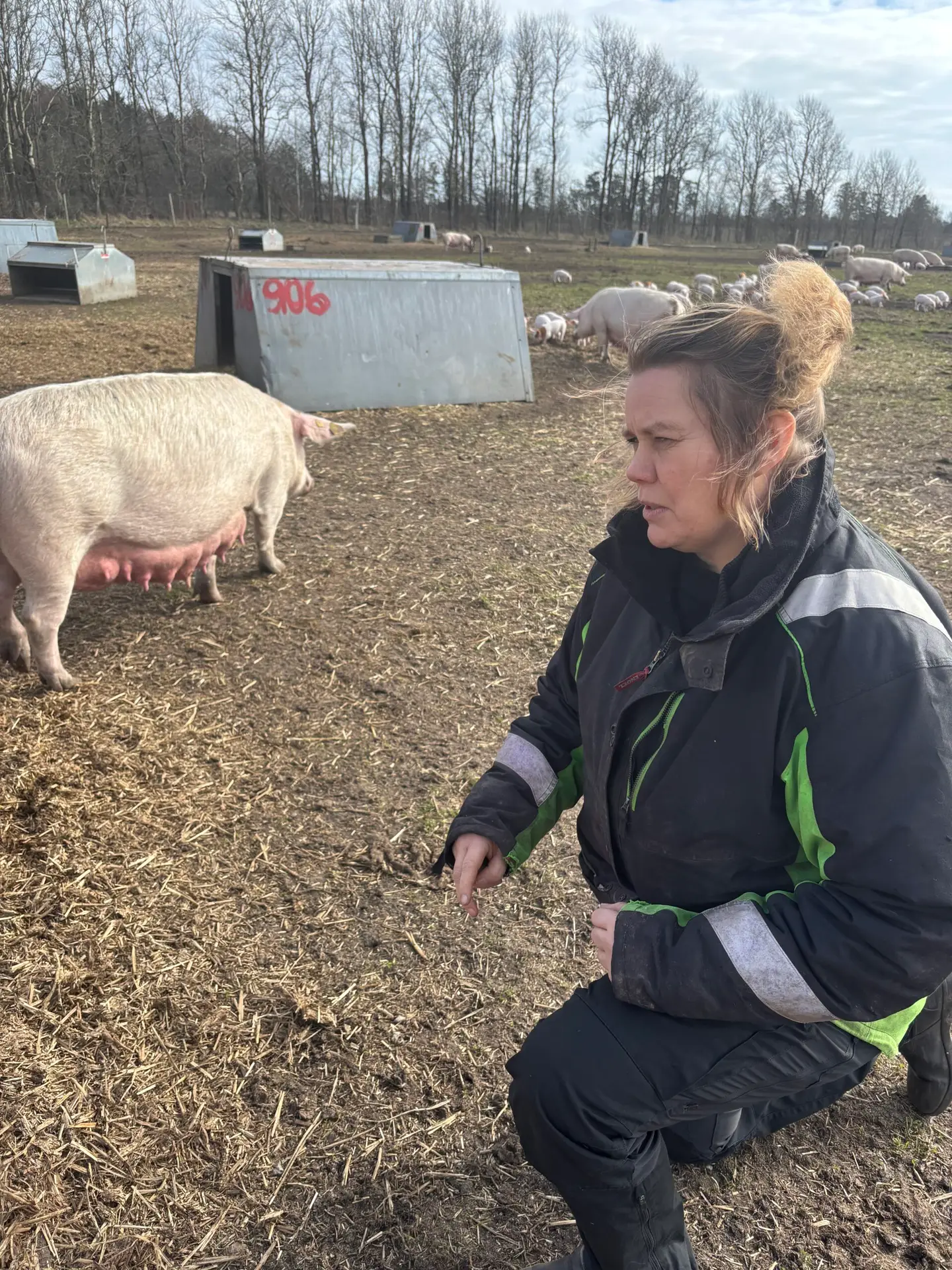
In Vorslunde, just outside Give in Denmark, lies Greensgaard. Here, Peter Bruun and Lene Conradsen run an outdoor pig production, where half of the genetics comes from DanBred Duroc. A solution they have no doubt fits their farm perfectly.
At Greensgaard in Denmark, they have 1,050 sows and produce 30,000 finisher per year, which are sold directly to the national supermarket chain REMA 1000. The whole idea of free‑range pigs began back in 1995, after Peter visited England and saw outdoor pigs for the first time. He then returned home determined to figure out how it could be done successfully in Denmark. Lene joined the farm a few years later and took responsibility for the pigs, although her original plan was to become an outdoor veterinarian. She did not want to be a veterinarian who did not know how pigs were actually managed, so she made sure to gain solid hands‑on experience.
“But I never moved on. I love being outdoors – from sunrise to sunset all year round. And it’s not just me – the pigs also love being outside, even when there are snow and frost,” Lene says with a smile.
Since then, it has been a long journey running an outdoor pig production, where economy and pigs on grass had to be balanced with supply and demand. But in 2015, they met Karsten Dejberg, who is the unique link between REMA 1000 and the pigs at Greensgaard. He takes care of everything in between and helped them secure the agreement with REMA 1000 in 2017.
“REMA 1000 was the exactly right supermarket chain to focus on. They insisted on the personal story when selling the meat, which meant that there was a photo of us on the meat packages in the refrigerated section,” Lene explains.
Choosing genetics based on numbers
Lene is good at caring for pigs and enjoys being part of the daily work in the herd. But she also has a very clear opinion on how their farm should be run. She wants numbers and facts on the table and does not base decisions on gut feeling alone – and this has been crucial when it comes to their choice of genetics.
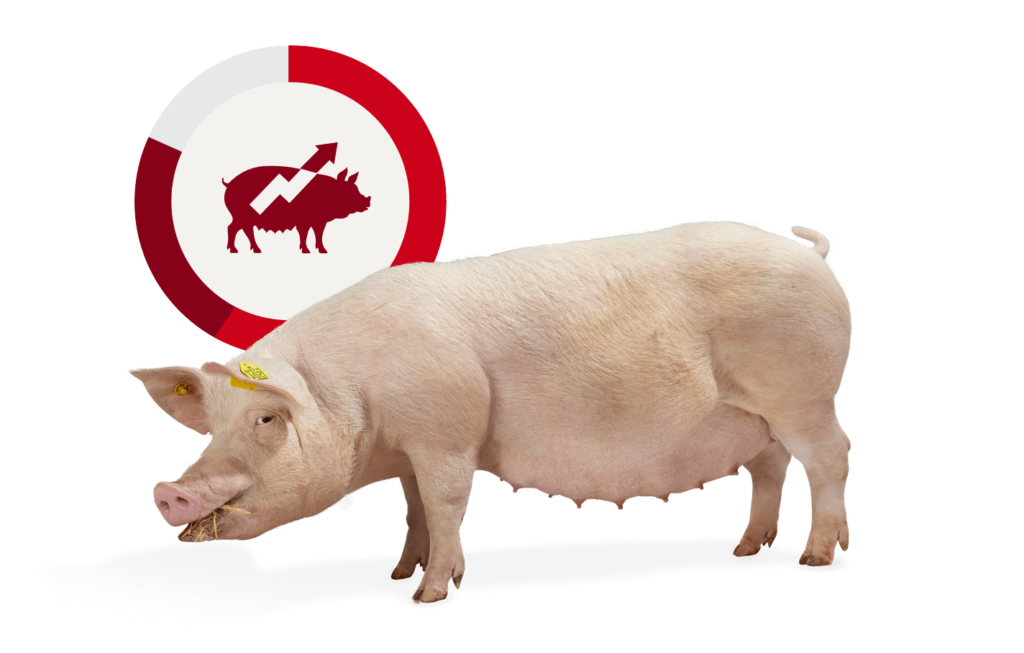
DanBred Duroc entered the picture in 2024, after Greensgaard had experienced a decline in results with their previous genetics. When they switched to DanBred Duroc as the boar line for all litters, they immediately saw the meat percentage increase by 2 percentage points from one week to the next.
“At first, Peter thought the meat percentage indicator at the slaughterhouse must have been broken or something like that. But after a few weeks with the same results, we could figure that it was due to the change to DanBred Duroc semen,” Lene explains.
The meat percentage has remained stable at almost 60% ever since. In outdoor production, meat percentage and feed efficiency are important traits – especially because growing pigs have more space to move, deep litter indoors, and access to outdoor areas 365 days a year. This places additional demands on feed consumption. Lene estimates that they use approximately 0.3 additional feed units per kg of growth compared to a conventional pig. Over the past year, feed efficiency at Greensgaard is on average 2.68 kg feed per kg gain.
“For us, it is about choosing genetics that fit our production system. Here, we see that the DanBred Duroc boar gives us a good meat percentage – and we are very satisfied with that,” says Lene.
Even though Lene is convinced that outdoor pig production is also driven by an ideological mindset, their pig production is ultimately a business. Like everyone else, they need to sell their meat. Fortunately, they are now experiencing a healthy balance between supply and demand.
Wednesday training is about more than training
For Lene, it is not just outdoor life and pigs that play a special role – being a good manager and creating a good workplace for their 17 employees is equally important. That is something she hopes to be remembered for.
“We try to create a good working culture where it is important to respect each other and show mutual trust. This is especially important when working across a large area of more than 86 hectares, where you do not run into each other very often,” Lene explains.
For the past five years, Wednesday training has been a fixed activity at Greensgaard. Personal trainer, Jeanette, comes and takes everyone through a full workout. Lene believes it is important that her employees take care of their bodies, as working with pigs outdoors all year around in all kinds of weather is physically demanding.
“I want to equip my employees properly, so they do not end up as worn down as my husband and I are today. And besides that, it really strengthens the social aspect – and we laugh a lot, especially if someone is particularly sore the next day,” Lene laughs.
At Greensgaard, they have created a strong workplace with a professional set‑up for outdoor pigs on grass – and you can clearly feel it.