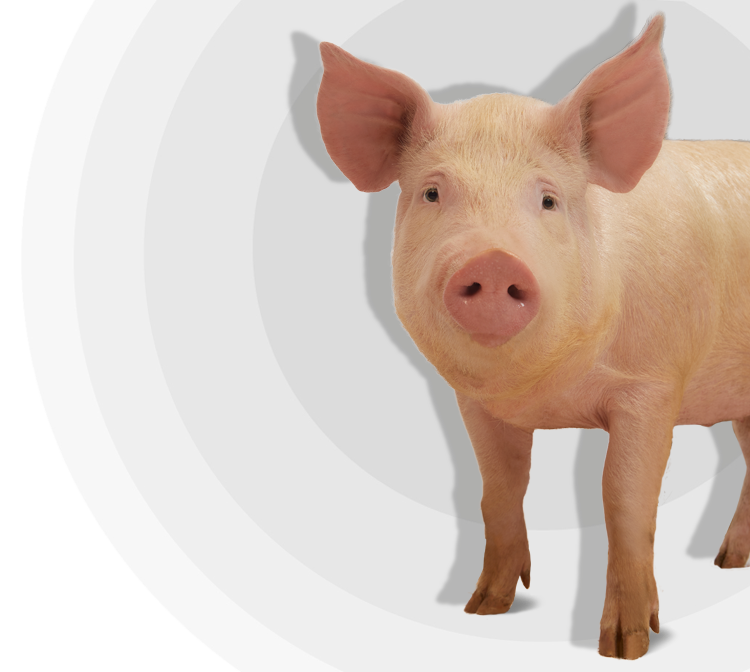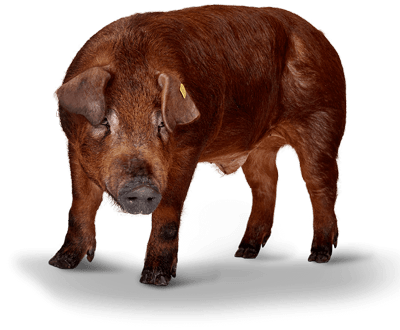
In the discussion about agriculture’s climate footprint, genetics is a significant factor that should not be underestimated. Through our breeding work, DanBred pigs have become more productive, helping to ensure a lower climate footprint and responsible economic performance.
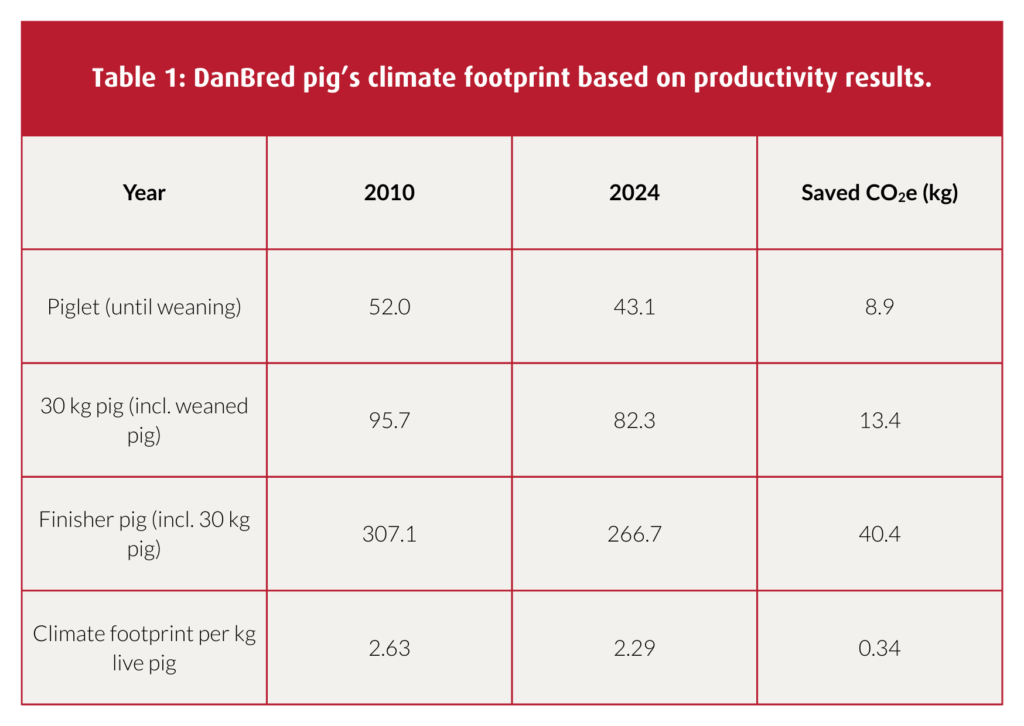
The genetics of pigs are continuously improved through DanBred’s breeding program. This results in more productive and robust pigs, while also enabling efficient pork production. Over the past 14 years, DanBred finisher pigs have significantly reduced their climate footprint. In fact, the footprint has been reduced by 40 kg CO₂-equivalents per DanBred finisher pig. This corresponds to all finisher pigs in Denmark today emitting 686,800 tons fewer CO₂-equivalents compared to 14 years ago. The main reason for this reduction is the major improvement in feed efficiency.
“I can see that the ratio between one kg of feed and one kg of pork is constantly improving, which provides a direct climate benefit and better economics. The saved feed leads to lower greenhouse gas emissions and makes the climate footprint significantly smaller,” explains Finn Udesen, Chief Consultant in Climate & Environmental Technology at SEGES Innovation, Denmark.
Improved feed efficiency makes the difference
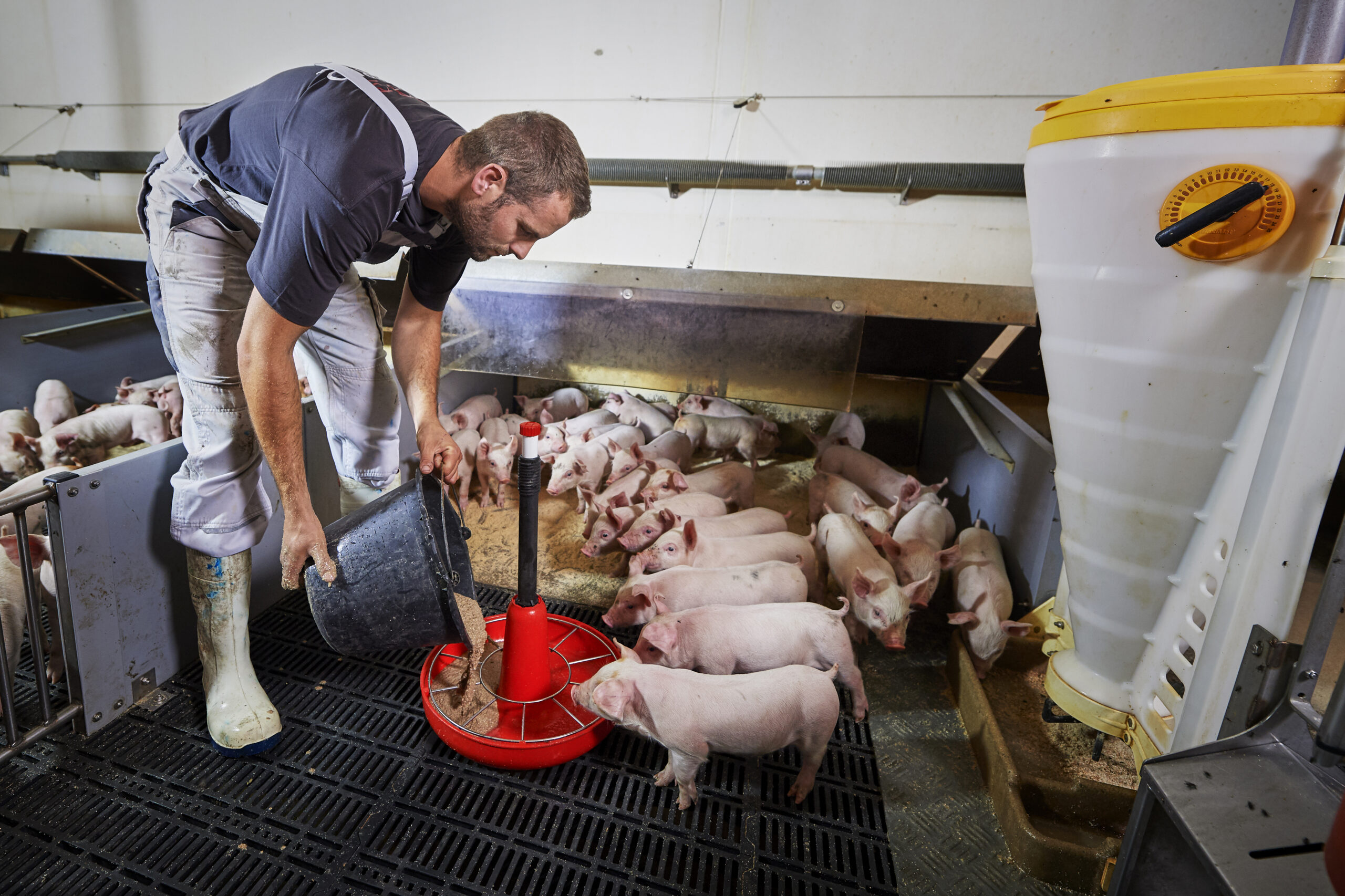
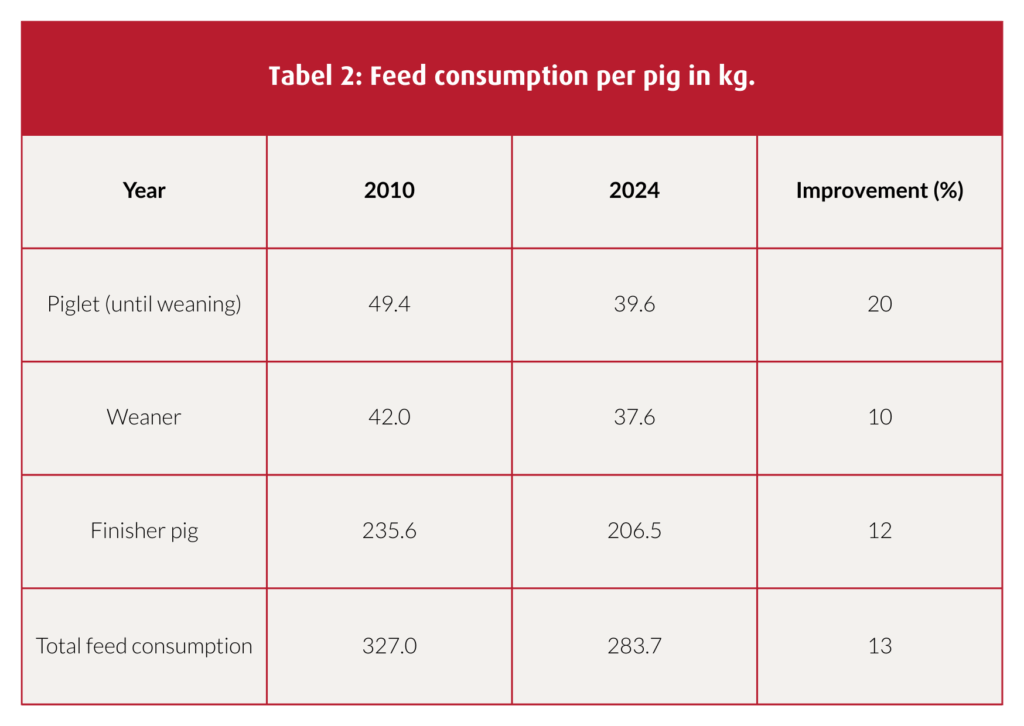
DanBred finisher pigs actually consume 29 kg less feed during the growth period than they did 14 years ago. This corresponds to a feed saving of 12%, which is the biggest reason for the declining climate footprint of pork. Quite simply, when pigs eat less feed but still grow faster, we need less feed production to produce pork.
It is not only the reduced CO₂ emissions from feed production that are affected by better feed efficiency in finisher pigs. There is also lower emission of enteric methane and other greenhouse gases because less manure is produced per pig.
Breeding focused on more with less
The goal of DanBred’s breeding program is to achieve the greatest possible genetic progress. The key is to produce more with fewer resources. Genetic selection for better feed efficiency, growth, more weaned piglets, and higher survival rates collectively contribute to reduced feed consumption and lower resource use.
Breeding for more efficient pork production means that the ratio between resource consumption and meat production improves year after year. In short, we can produce more pork with the same resources year after year. This is achieved through breeding for productivity in the form of more weaned piglets per sow per year and higher daily gain, while pigs consume less feed but reach the same slaughter weight.
DanBred’s breeding program has made a significant contribution to reducing the climate footprint of the pork produced today. Going forward, DanBred will continue to focus on breeding for better productivity and profitability for you as a producer, which also has a positive effect on the climate footprint of pig production based on the right genetics.