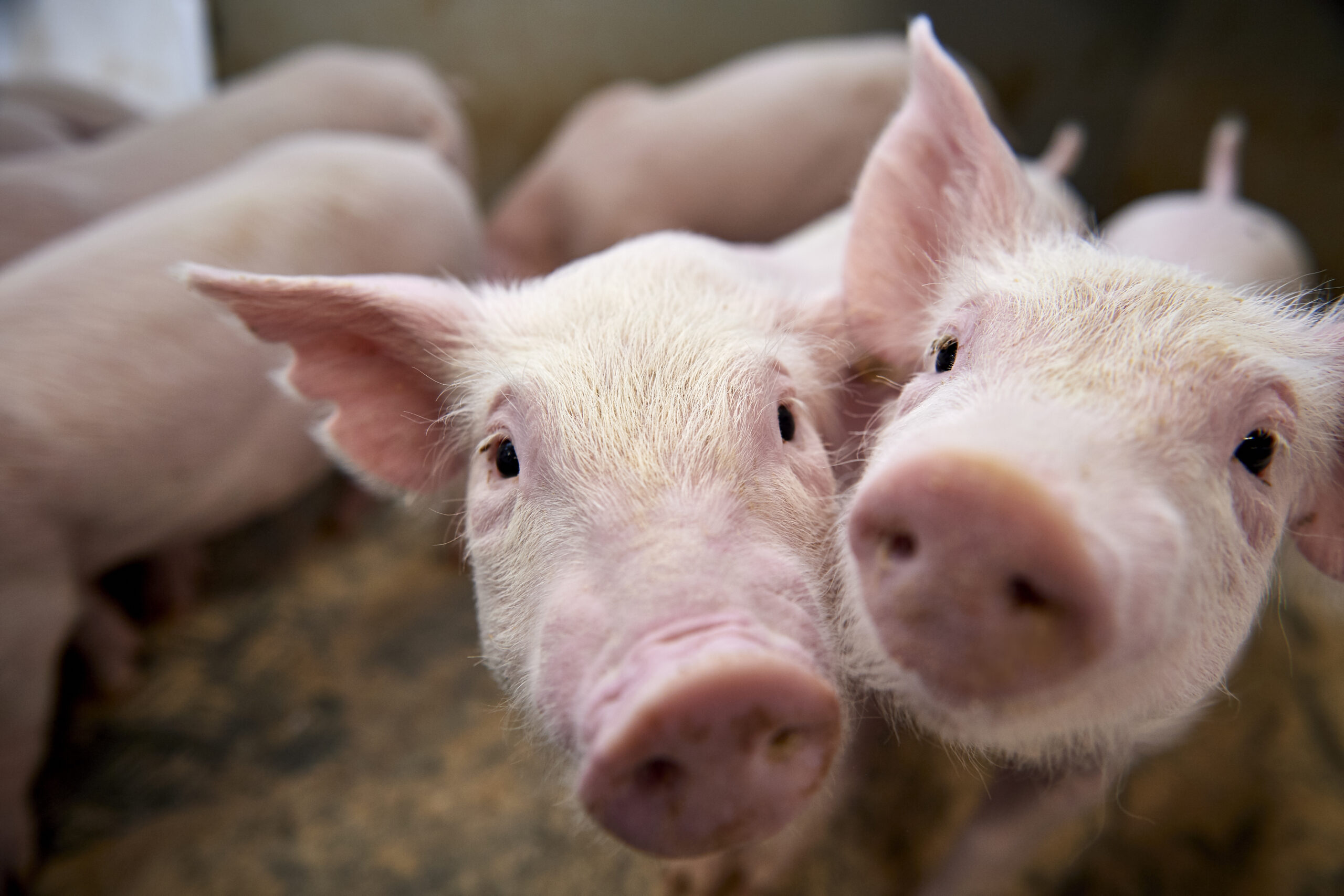
Heat stress can have huge impact on pig production – especially in warmer climates and during summer. This is a serious problem around the world that we see reoccur year after year.
We know that pigs are more sensitive to heat stress than other animals, as they have a limited amount of functional sweat glands, so we need to support them to cool down as they are not really able to sweat.
Heat stress’ consequences for pig production include reduced growth rate of grower/finisher pigs, increased mortality and morbidity rate, seasonal infertility in sows, and reduced feed intake in sows, just to name a few. Over the years, these effects have caused massive economic losses for pig producers worldwide. However, the impacts can be minimised with these five practical management approaches, while your pigs’ full potential is still reached.
1. Ensure good ventilation and cooling system
Evaporative cooling or other cooling systems, i.e., high-pressure fogging system, sprinklers, fans, and related equipment, must be cleaned and be in good function. If possible, use cool water for the cooling systems. Temperature, ventilation rate, air speed, relative humidity, and other relevant factors should be adjusted to ensure optimal housing conditions.
2. Provide sufficient amounts of clean and cool water
Water is the most important nutrient for pigs and cool water helps reduce the pig’s internal temperature. Moreover, water intake is closely related to feed intake. Therefore, ensuring high water intake can help maintain high feed intake when the temperatures are high.
Make sure your pigs drink enough water according to their age and production cycle, as shown in Table 1. Providing extra water in the pigs’ feeding trough – especially pre-farrowing as well as for lactating sows and finishers – can be beneficial to minimise the consequences of heat stress and can stimulate feed intake.
Table 1. Water requirements of pigs
| Group of animals | Water requirements (L/day) | Flow rate (L/m) |
| Lactating sows | 35-50 | 4* |
| Boars | 8-10 | 1 |
| Gestating sows | 12-20 | 1 |
| Finisher pigs, 45-100 kg | 6-10 | 0.8-1.2 |
| Grower pigs, 15-45 kg | 4-8 | 1 |
| Weaners | 1-5 | 0.5-0.8 |
| Piglets (including sow milk) | 1-2 | – |
*Minimum requirement.
Source: DanBred Manual
3. Minimise activities during the hottest period of the day
Try to minimise activities such as feeding, insemination, moving animals in the stables, or transport between units, farms and to slaughterhouses at the warmest hours of the day.
4. Focus on the nutrients and feed composition
Aside from optimising the environment for your pigs, nutrition adaptation can reduce the consequences of heat stress. Protein, fibre, fat, and amino acids should be adjusted to reduce the ‘thermal effect of feed’ – but without compromising performance.
Specific feed additives, such as betaine, could be an alternative to minimise the effects of heat stress via the sow’s feed. If you have working boars, antioxidant supplements can improve semen quality during times of higher temperatures.
The timing of feed delivery is highly crucial – avoid feeding during the hottest time of the day (10 AM – 3 PM) – and remember to ensure fresh feed and good hygiene at all times.
5. Choose robust animals for your herd
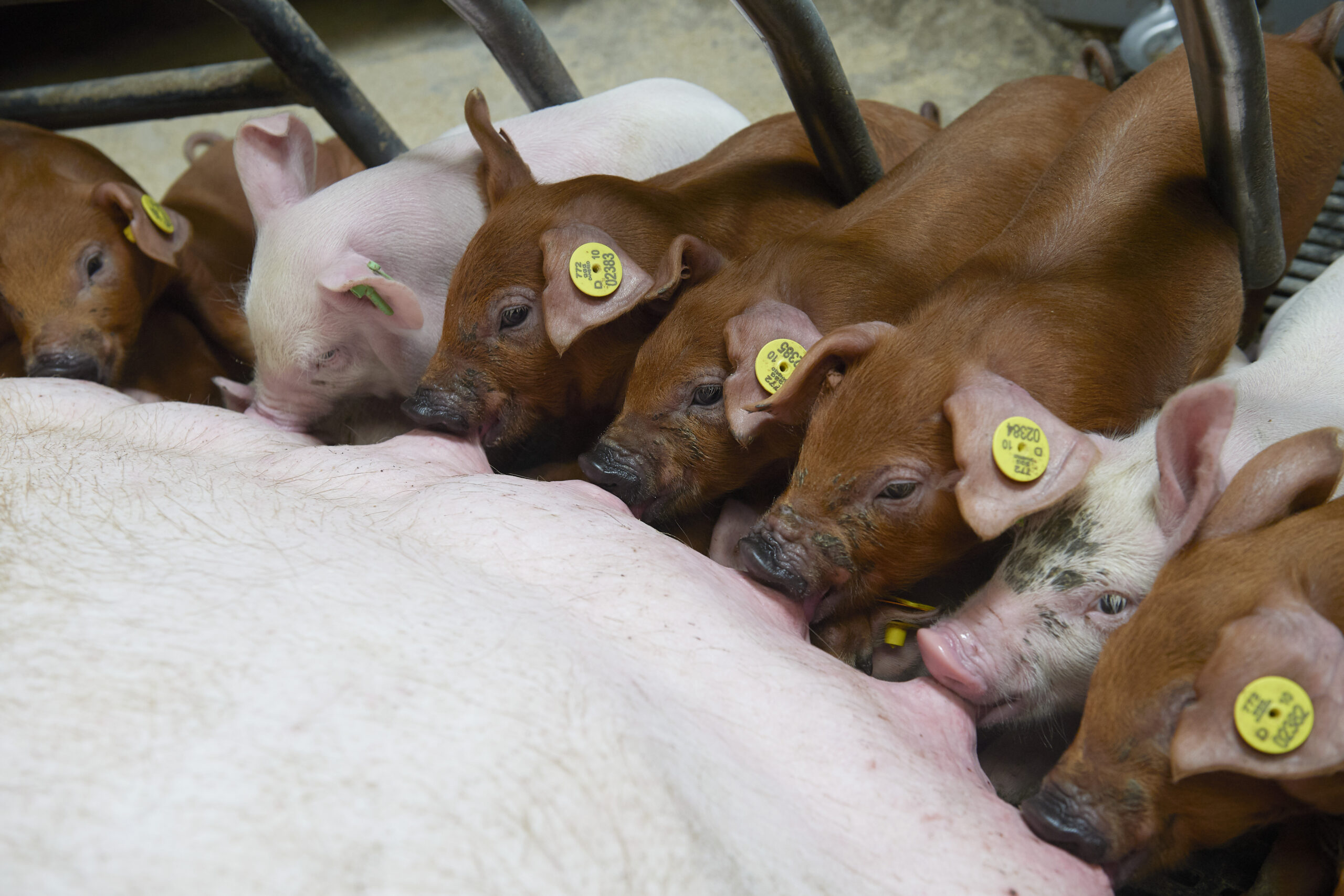
DanBred sows have a good appetite, and they produce many vital and robust weaners, resulting in robust finishers with superior finisher traits. DanBred genetics are developed to deliver robust and productive pigs that become stronger and more viable generation after generation. For example, piglet survival has increased by 1.6 percentage points in herds using DanBred genetics in just two years.
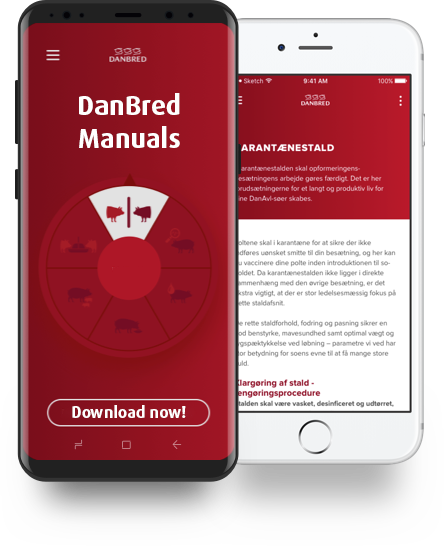
You can find more practical tips for optimal handling of your pigs in DanBred’s manuals. |