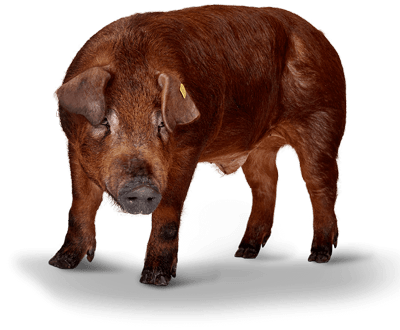
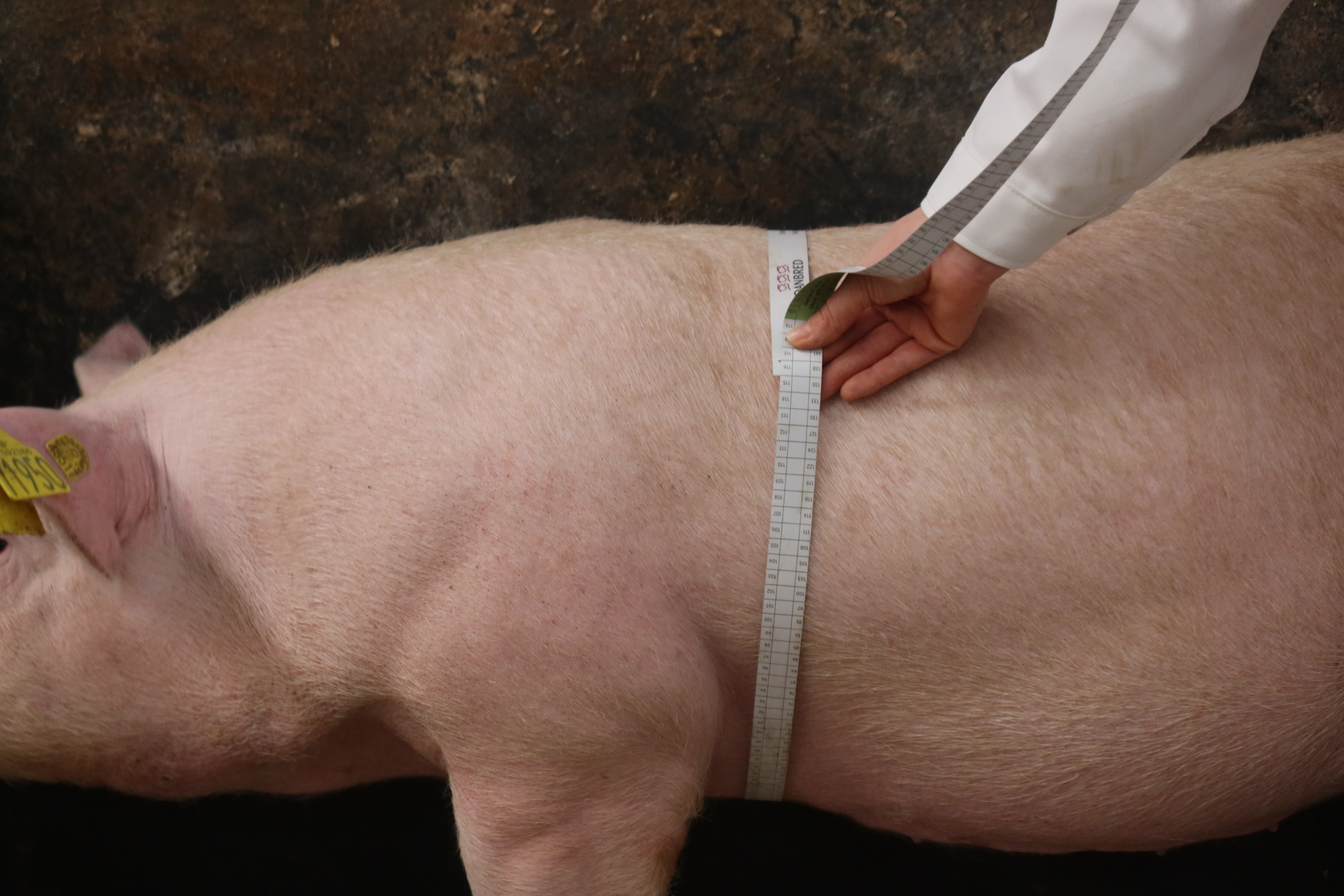
The gilt’s weight at first service is the best indicator of her longevity throughout her productive life as a sow. Studies clearly show that a weight that is too high at first service reduces sow longevity and productivity, yet only few herds actually weigh their gilts.
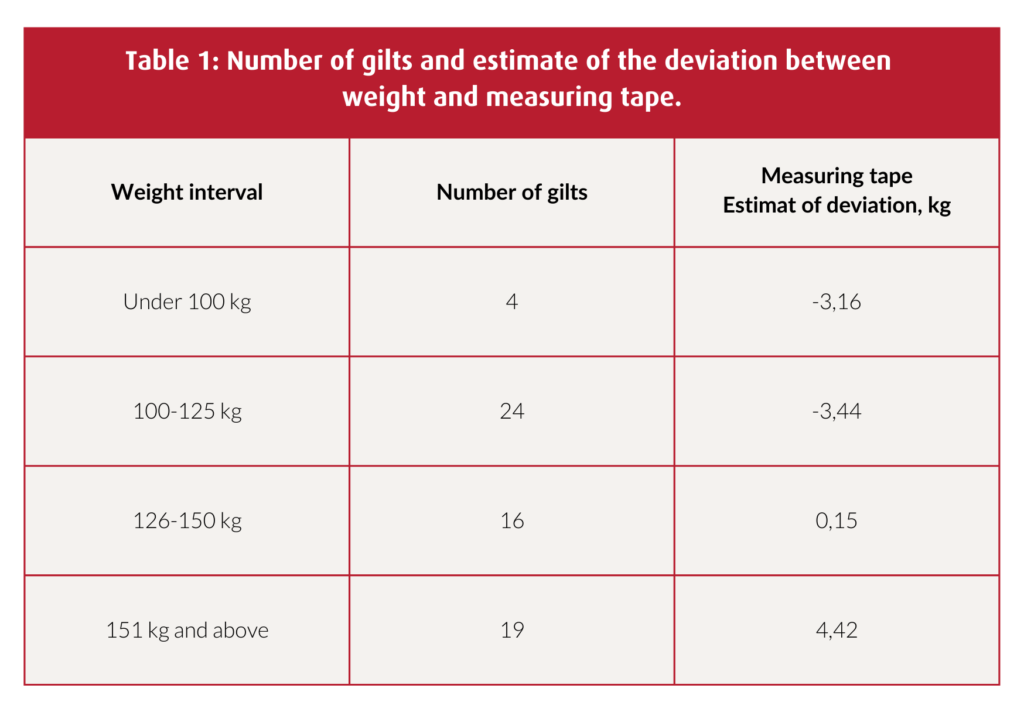
DanBred’s measuring tape can be used as an alternative to weighing the gilt. DanBred gilts should be serviced when they weigh between 150-165 kg, which is clearly marked on the tape. The tape is an easy and safe tool when weighing gilts is not possible.
“The measuring tape has been tested by SEGES innovation and in herds and is particularly accurate in the weight range we want gilts to have at first service. We have handed out many tapes over the past year, and we hope it will become a regular tool in the barn,” says Henrik Henriksen, Consultant in Brokerage & Genetic Sales at DanBred.
Age is the second-best indicator of longevity
SEGES Innovation conducted a large analysis of 500,000 gilt services across 319 herds using SEGES Insight data, which is a herd management tool. They investigated whether the gilts’ age could be used as an indicator of sow longevity, as age and weight at first service are strongly correlated.
The results showed that a service age of 211–230 days provided the lowest probability of being culled before the third farrowing. They also observed that when gilts were serviced at more than 230 days of age, longevity decreased.
“The best results are achieved when the herd makes use of the data available to them. This allows them to optimise even the smallest parameters,” says Henrik Henriksen.
If you are unable to weigh your gilts or use a measuring tape, it is recommended to rely on their age at service.
Control gilt growth with phase feeding
To achieve the optimal weight at first service, more focus must be placed on gilt development. DanBred recommends managing gilts’ daily growth using a combination of restricted feeding and phase feeding. The phase‑feeding recommendations cover the gilts’ needs across three stages and ensure an optimal weight around 210–230 days as well as the correct backfat thickness.
Weight and backfat thickness are more important than age at first service when it comes to sow longevity. However, when the recommended gilt-feeding guidelines are followed, age can serve as a reliable indicator for determining when gilts should be serviced.
DanBred’s manual guides you through the current recommendations for feeding, housing, and selecting gilts.
DanBred recommendations on giltsGilts should weigh 150–165 kg at first service to ensure good longevity.Gilts should be fed restrictively with phase feeding to achieve the correct weight and backfat thickness.Use gilt service age—aim for 211–230 days—if you are unable to weigh them or do not have a measuring tape. |